
Advancements in medical technology have transformed how doctors diagnose and treat lung conditions. One such revolutionary procedure is Endobronchial Ultrasound (EBUS) — a minimally invasive technique that allows accurate evaluation of lung diseases without the need for major surgery.
What is Endobronchial Ultrasound (EBUS)?
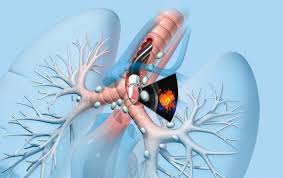
Endobronchial Ultrasound (EBUS) is a specialized bronchoscopic procedure that combines bronchoscopy with ultrasound technology. It helps doctors visualize structures inside the chest, particularly:
- Lymph nodes
- Airways
- Lung masses
- Mediastinal structures (area between the lungs)
Using real-time ultrasound guidance, doctors can safely collect tissue samples (biopsy) for diagnosis.
Why is EBUS Performed?
EBUS is commonly recommended for:
1. Lung Cancer Diagnosis & Staging
It helps determine whether cancer has spread to nearby lymph nodes, which is crucial for planning treatment.
2. Enlarged Lymph Nodes
To investigate unexplained lymph node enlargement in the chest.
3. Infections & Inflammatory Diseases
Conditions like tuberculosis, sarcoidosis, or other lung infections can be diagnosed more accurately.
How Does the Procedure Work?
- A thin, flexible tube called a bronchoscope is inserted through the mouth into the airways.
- The attached ultrasound probe provides detailed images of surrounding tissues.
- A fine needle is guided in real time to collect tissue samples (called EBUS-TBNA: Transbronchial Needle Aspiration).
The procedure usually takes 30–60 minutes and is performed under sedation.
Benefits of EBUS
✔ Minimally invasive
✔ No surgical incision
✔ Short recovery time
✔ Accurate diagnosis
✔ Reduced hospital stay
Compared to traditional surgical biopsy methods, EBUS is safer, quicker, and more comfortable for patients.
What to Expect After the Procedure?
Most patients can go home the same day. Mild throat discomfort or cough may occur temporarily. Results from biopsy samples are typically available within a few days.
Conclusion
Endobronchial Ultrasound has revolutionized lung diagnostics by providing precise, safe, and minimally invasive evaluation of chest conditions. Early and accurate diagnosis plays a vital role in successful treatment outcomes — and EBUS is a powerful tool in achieving that goal.
If you or a loved one has been advised to undergo EBUS, consult your pulmonologist to understand the procedure and its benefits in your specific case.